
Receita grátis
Como fazer Pastel de Nata
Entenda o que torna Pastel de Nata especial, cozinhe a receita grátis da ComidaTime e continue com Authentic Portuguese Cuisine.
Por que começar aqui
Pastel de Nata is cooked the way Belém in Lisboa cooks it — good olive oil used without counting, salt judged by hand, and no fuss about the plate. This is the home version, written down the way a Portuguese family cook actually puts it on the table.
Pastel de Nata hails from the historic Jerónimos Monastery in Belém, Lisbon, where it was first crafted by monks in the 19th century. This creamy custard tart, nestled in a flaky puff pastry shell, has since become a beloved treat throughout Portugal, often enjoyed with a strong espresso at cafés or as a sweet end to a family meal. The experience of biting into a freshly baked Pastel de Nata is a harmony of textures and flavors: the crisp, buttery layers of the pastry give way to a velvety custard, subtly infused with cinnamon and the zest of lemon. Dusting the top with confectioners' sugar and ground cinnamon is a traditional finishing touch, adding a gentle warmth and sweetness that rounds off each indulgent bite.
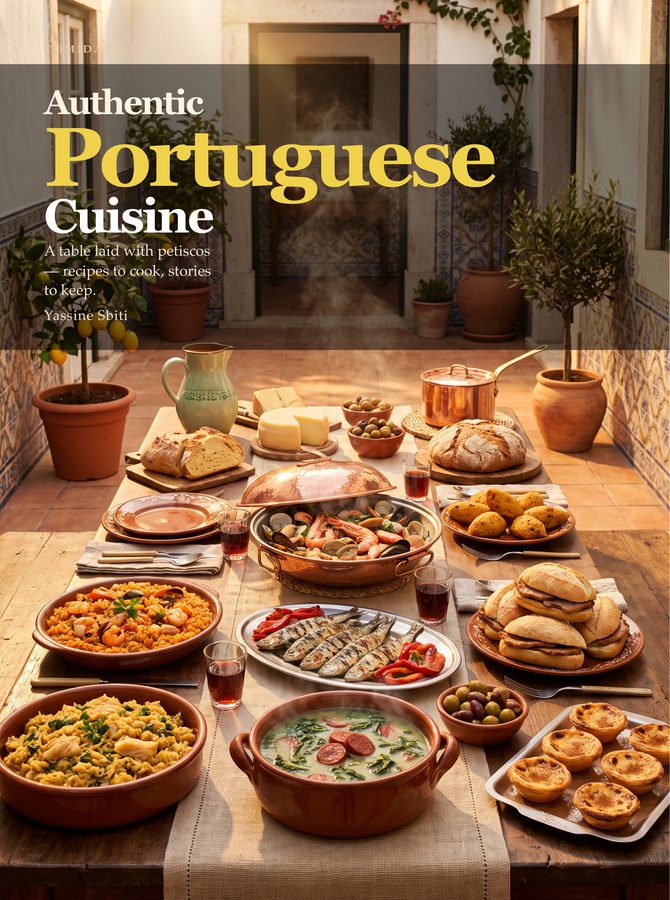
Authentic Portuguese Cuisine
Bring the full collection home—authentic recipes, cultural notes, and a beautiful book for your table or as a gift.
The Portuguese pantry, pots, and table
The spices, mixes, and hearths that belong to Portuguese cooking — then the people around them, and the kitchens still joining the table.
Open the Portuguese pantry Open Portuguese cookware The Portuguese table Host a Portuguese night Join the community