
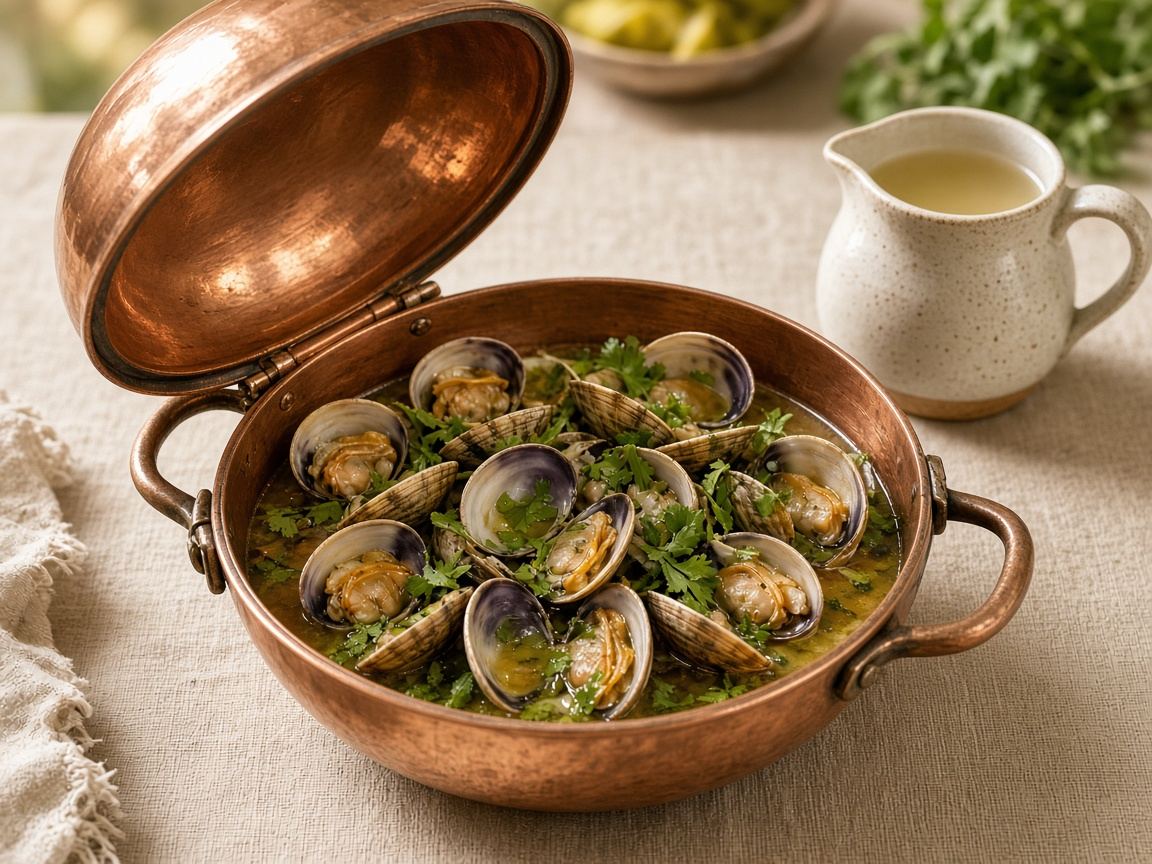
Cataplana
The copper clamshell for a different fish night.
A Portuguese meal is one pot of bacalhau or a bowl of caldo verde — not both, and pastel de nata is coffee, not dessert on the fish.
Bacalhau à Brás is a weekday or Sunday lunch of shredded salt cod, potatoes, and eggs. Caldo verde is a soup night with broa. Pastéis de nata belong to a café counter or the end of another meal.
The inherited table has a tacho and olive oil. The newer table still puts bread down first.
Back to Portuguese cooking · Host a Portuguese night · Pantry · Cookware
Yellow from egg and potato, olives, a green salad, wine.
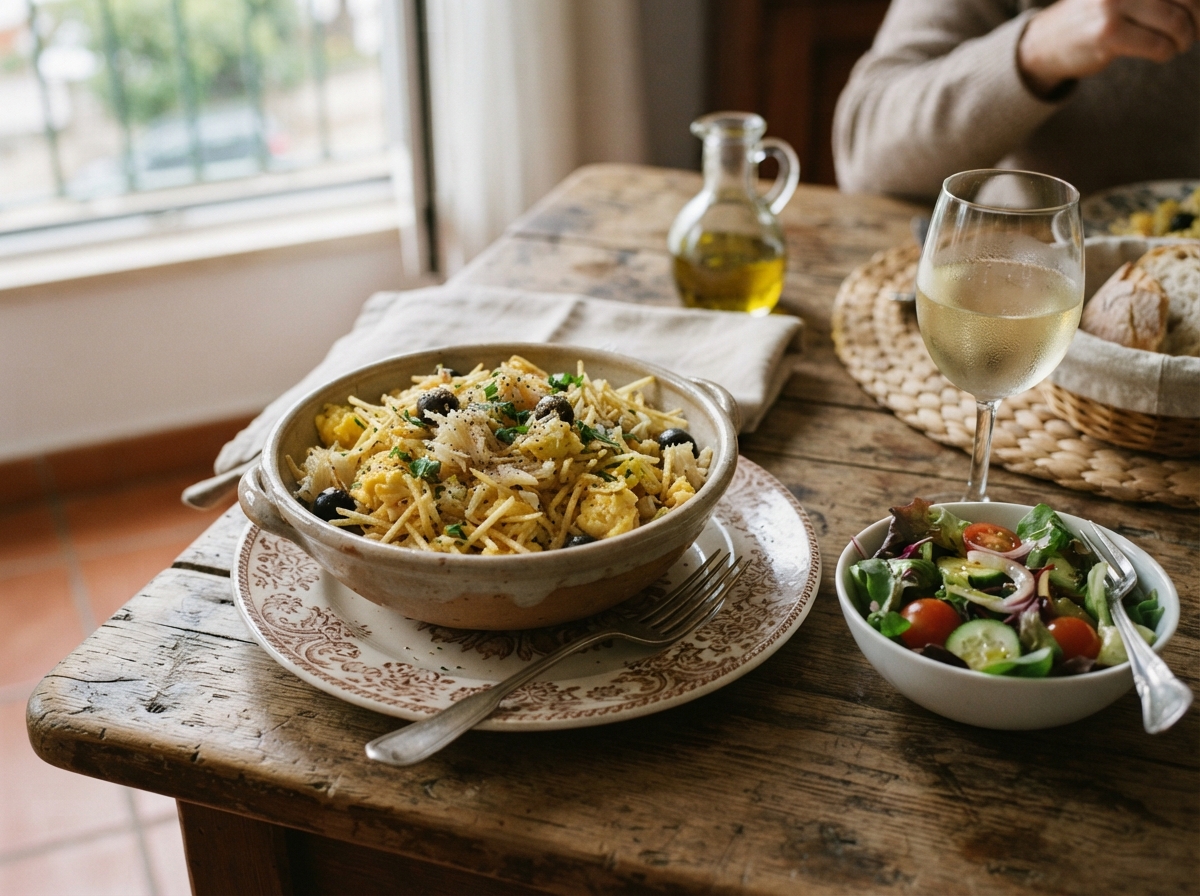
The inherited lunch is salt cod you soaked yesterday. À Brás is the friendly heap: matchstick potatoes, onion, egg, parsley, olives. Salad after or beside, not under.
Leave the soup for another night.
Deep bowls, broa, a coin of chouriço in each.
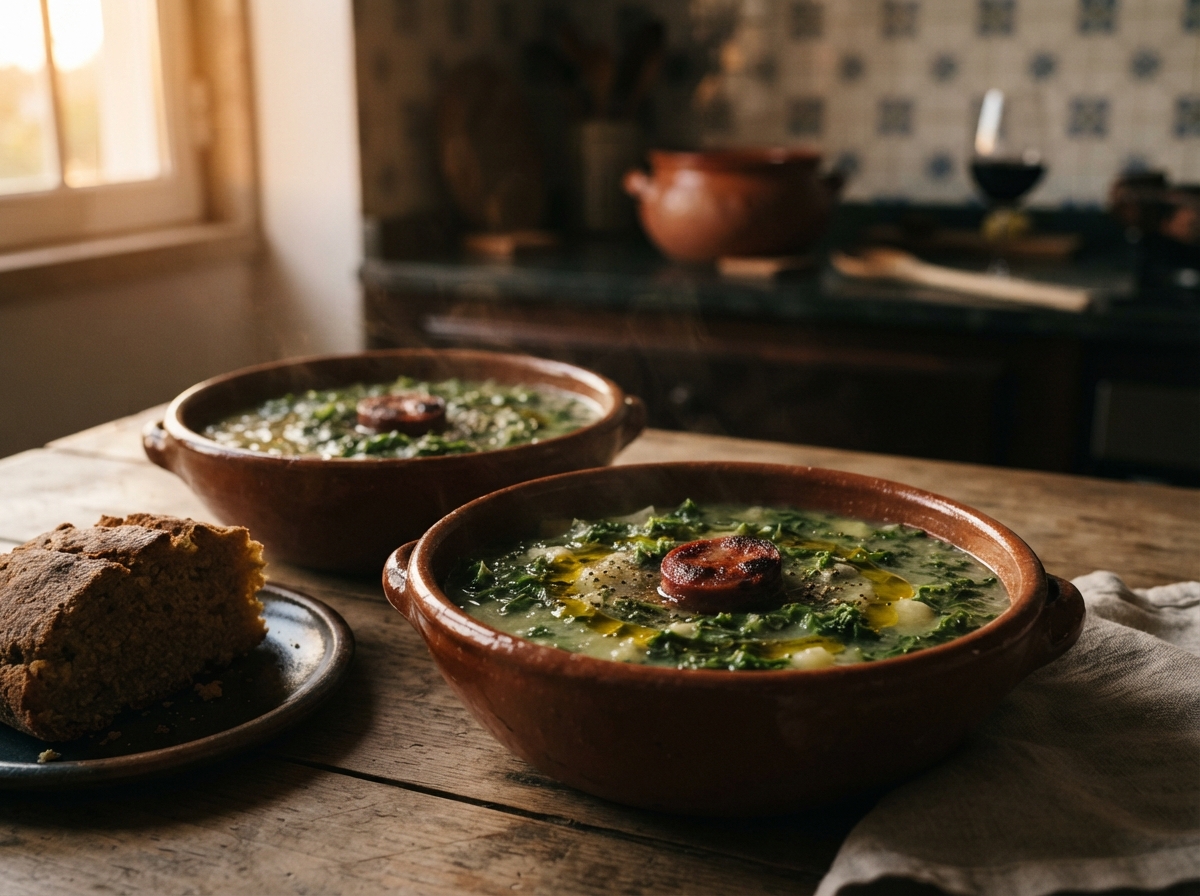
The newer table can be only soup. Kale in a thread, potato body, olive oil at the end. Bread. That is enough.
Do not add a second main of bacalhau.
Cod is a plate. Caldo verde is a bowl. Custard tarts wait for coffee.
Bacalhau wants a green salad, olives, and wine. Broa or papo-seco on the side. It is not served in a bowl of caldo verde.
Caldo verde is sliced kale in a potato-onion broth with a slice of chouriço. Broa to dunk. That is supper.
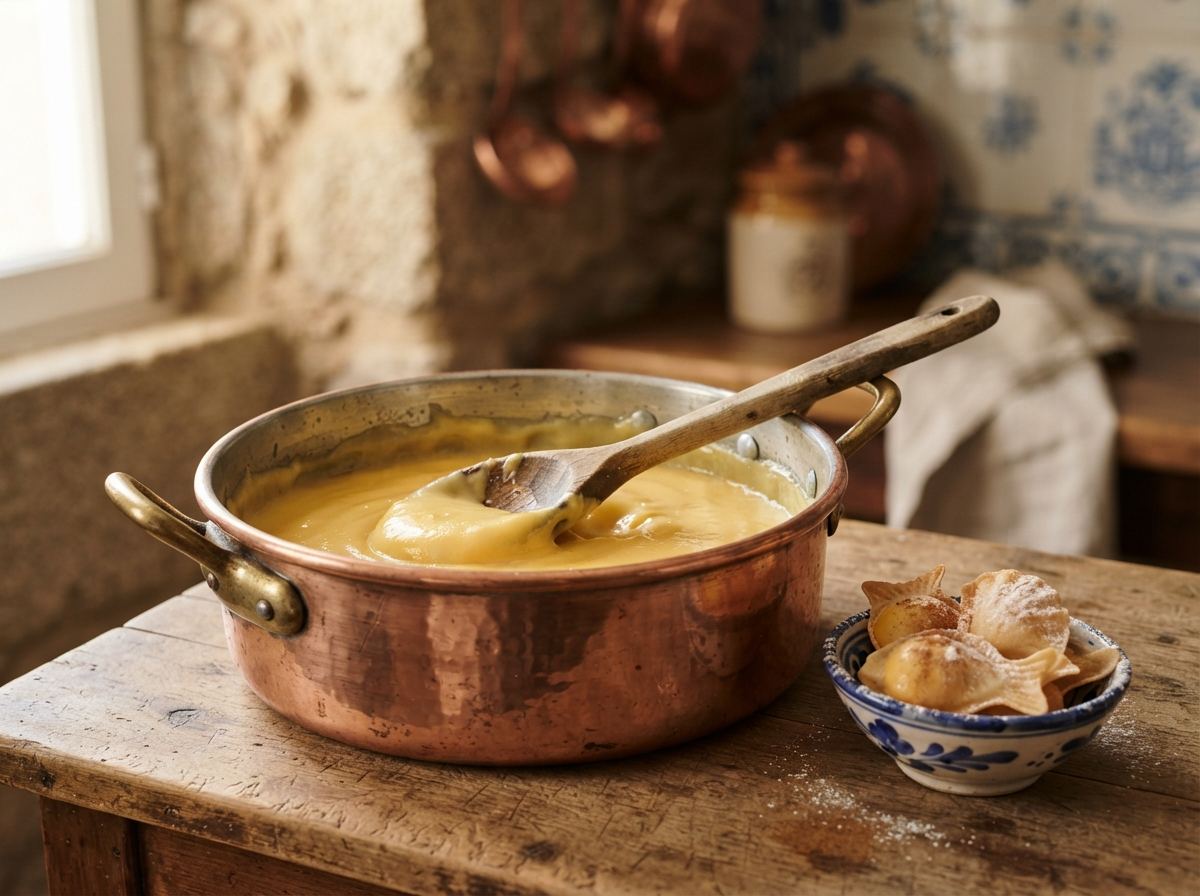
Pastel de nata is eaten standing at a pastelaria with an espresso, or after a meal that is not already a custard. Do not plate it beside the cod as a 'Portuguese combo.'
Objects you can read about here, then find on Amazon — search links, not a single SKU that goes stale.
The copper clamshell for a different fish night.
The everyday pot.
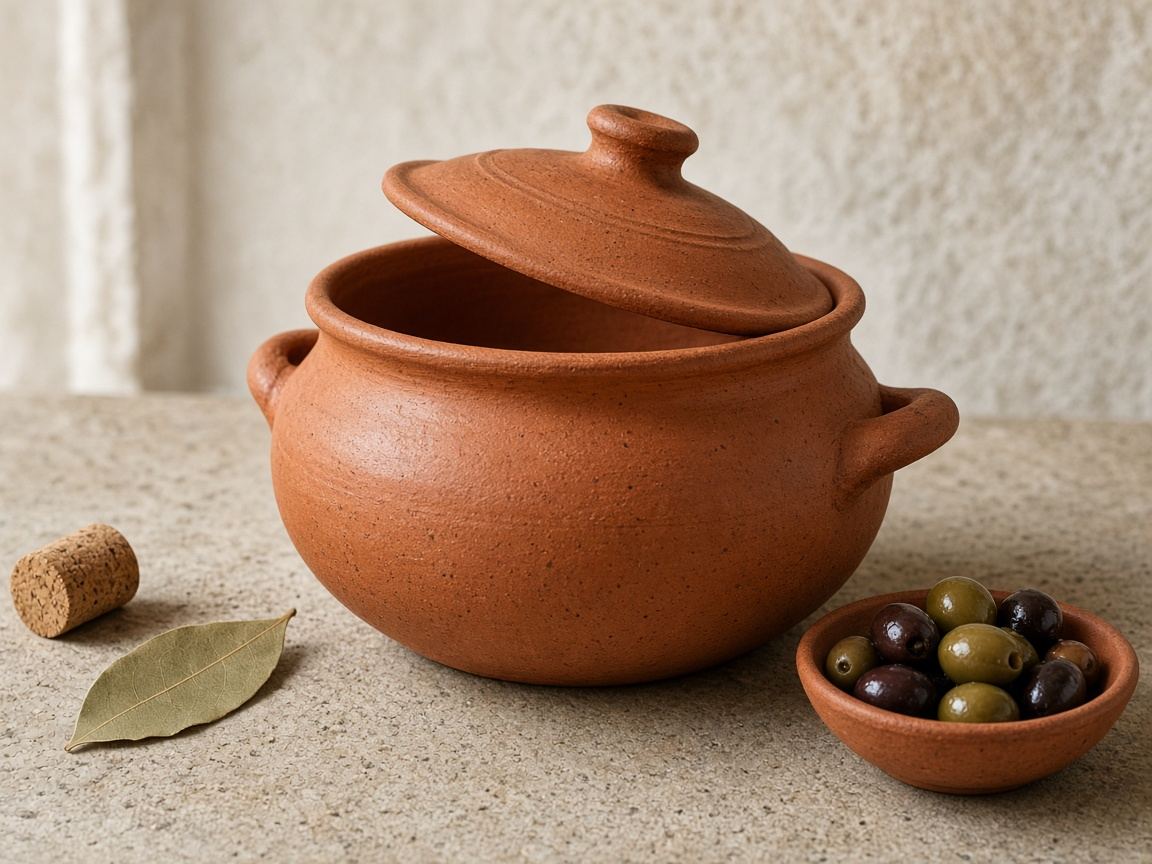
A lidded casserole for the oven.
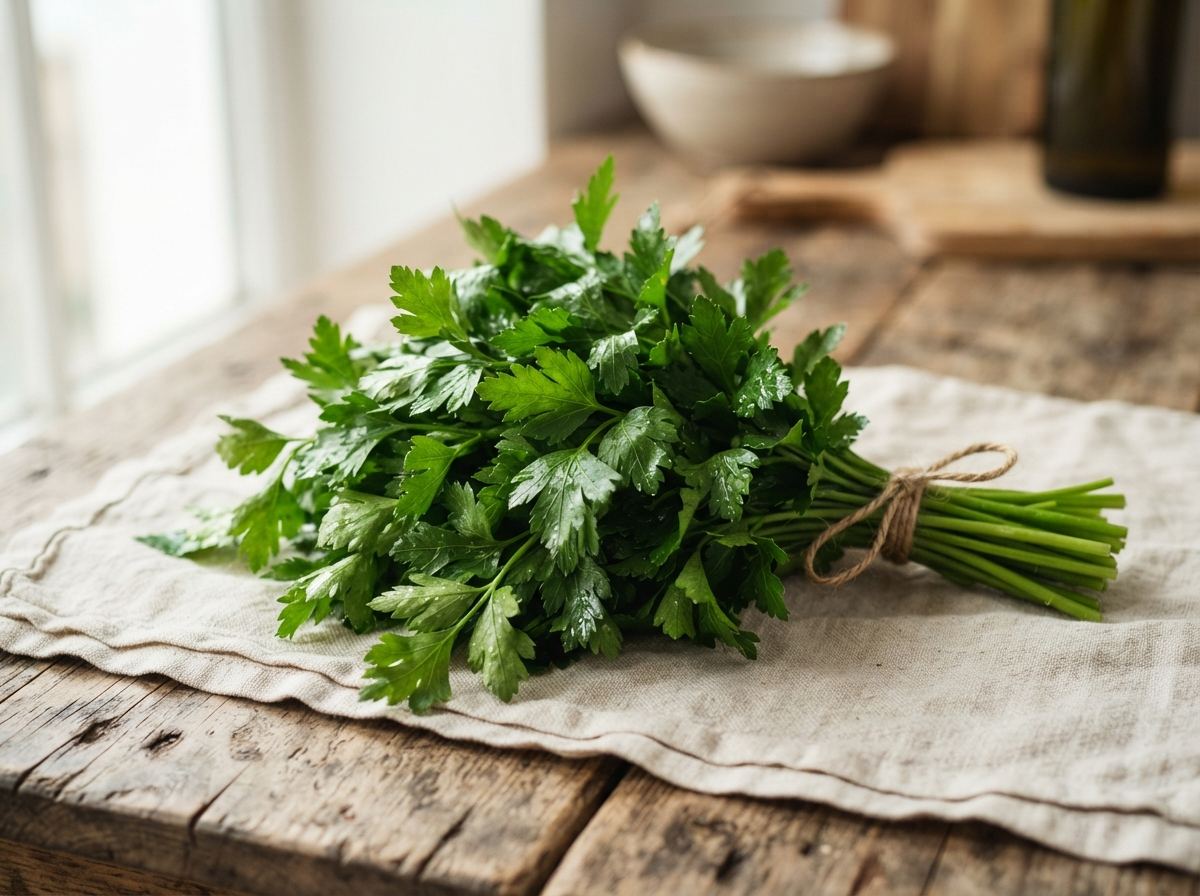
The last scatter on à Brás.
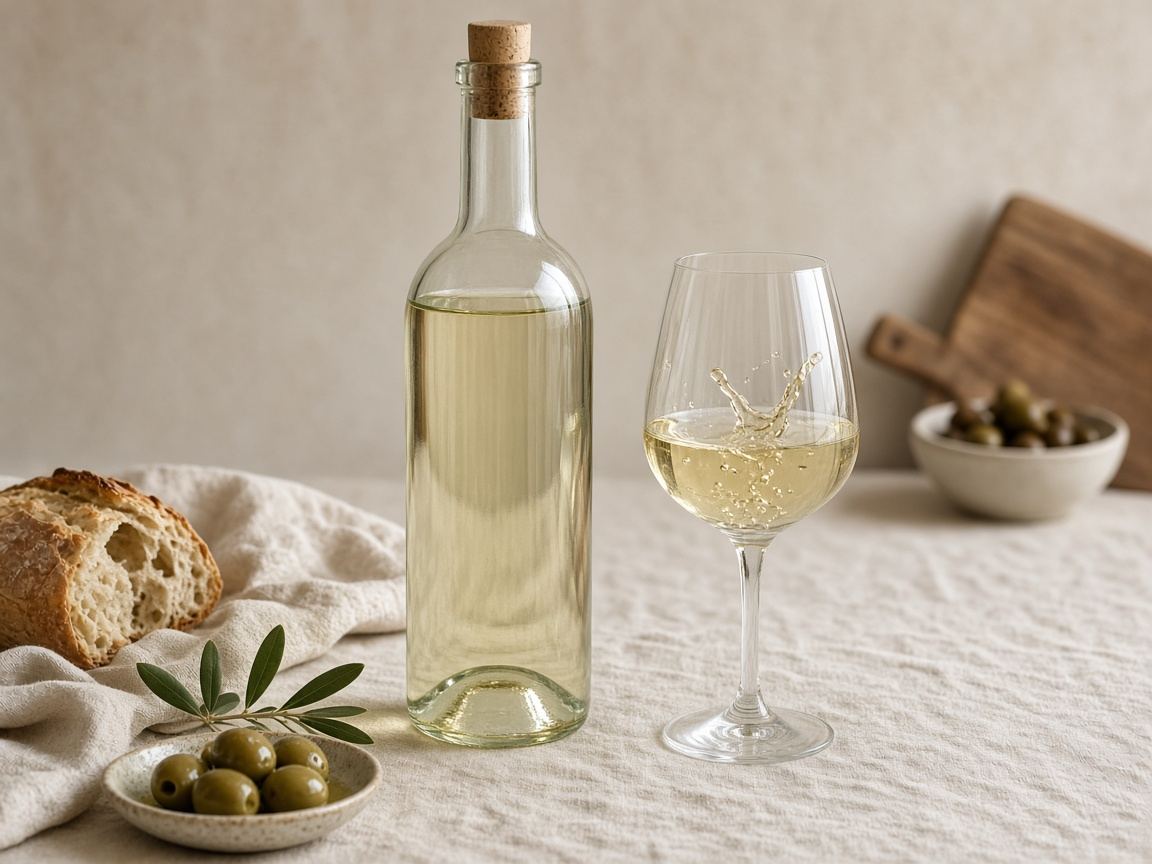
Vinho verde if you can find it.
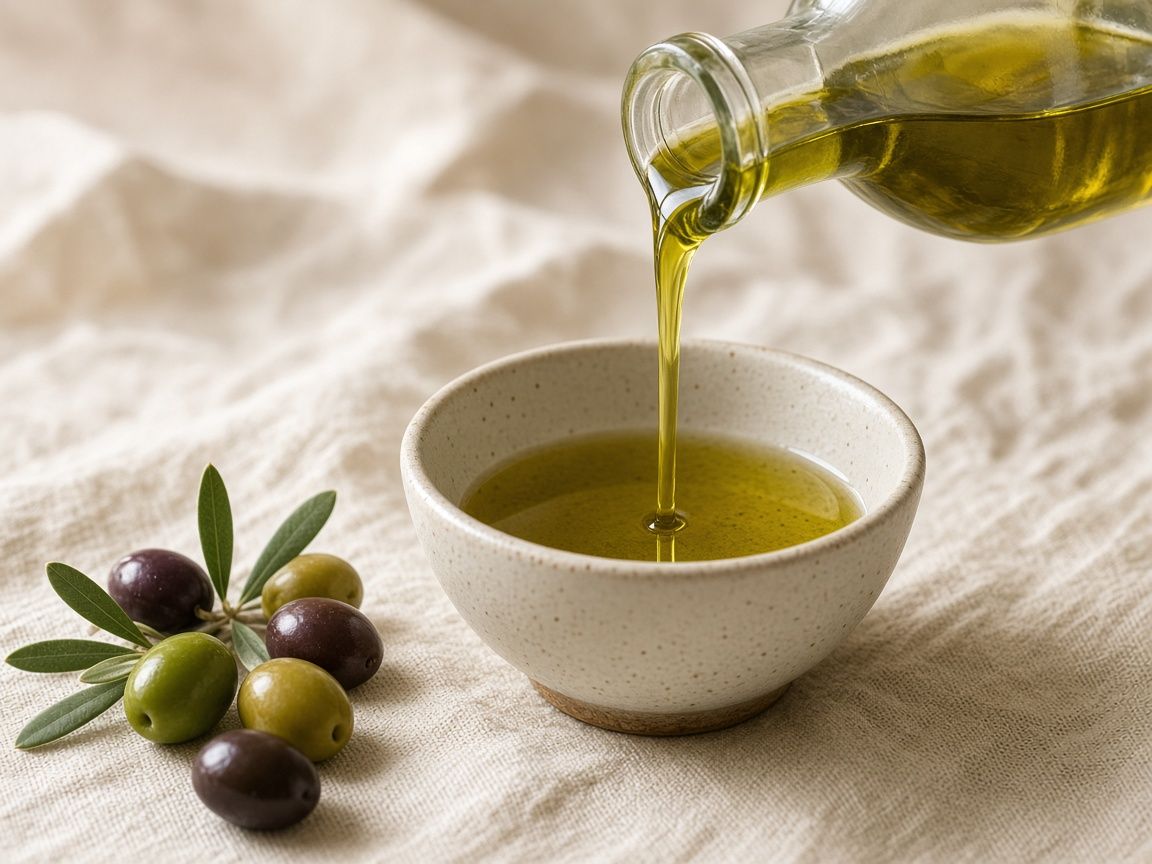
Poured at the table into the soup.
The spices, mixes, and hearths that belong to Portuguese cooking — then the people around them, and the kitchens still joining the table.
Open the Portuguese pantry Open Portuguese cookware The Portuguese table Host a Portuguese night Join the community